What the Invoice Leaves Out: A 2026 Worksheet for Assists, Royalties, and Tooling
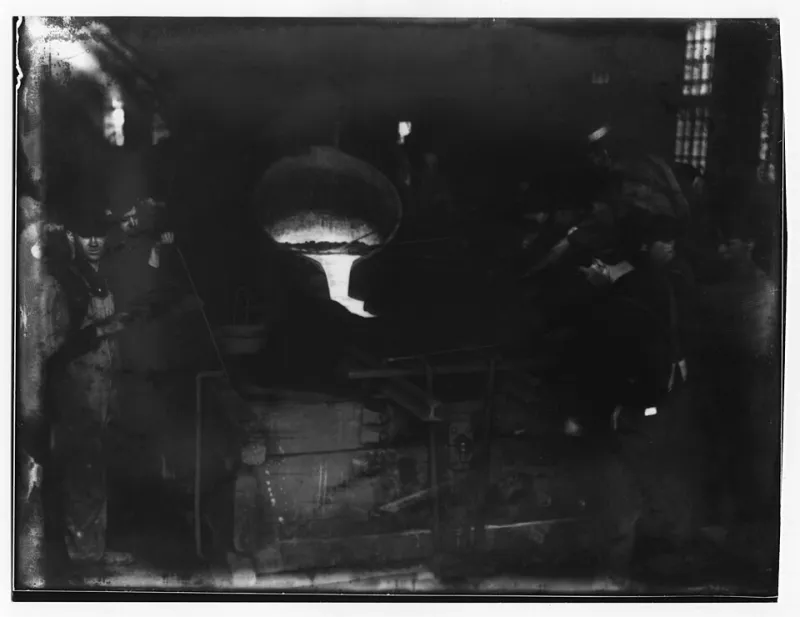
Photo: Green, Allen Ayrault, 1880-1963, Public domain, via Wikimedia Commons
Most importers believe the valuation question is settled the moment a commercial invoice arrives. The unit price is negotiated, the terms are stated, the total is extended, and the entry is filed. What remains, in that view, is arithmetic.
Customs and Border Protection begins somewhere else. Under the transaction value method in 19 CFR Part 152, the price actually paid or payable is a starting figure, not a verdict. The regulation then requires a series of additions, and each one describes a commercial arrangement that mid-market importers enter into constantly without recognizing it as a customs event.
Tooling, Molds, and the Assist That Never Ships
An assist is merchandise or a service the buyer supplies to the seller free of charge or at a reduced cost, and which is used in producing the imported goods. The classic example is a mold. A U.S. buyer contracts with a domestic tool shop for a die; the die is built in Asia, remains at the supplier for the life of the program, and never appears on an entry document. It is still an assist, and its value belongs in the declared price.
The same logic reaches further than most importers expect. Engineering work performed in the United States and transmitted to a foreign supplier, design drawings, prototypes, and materials furnished to the factory all fall inside the definition. So does the cost of developing the tooling itself, even when the buyer never takes title in any physical object.
Assists are not added in full to a single entry. They are amortized across the production attributable to them, and the importer must be able to show the allocation method, the total cost, the expected unit volume, and the period over which the value is being recovered. A defensible amortization schedule is the difference between an addition CBP accepts and an addition it recomputes.
Royalties and License Fees: The Condition-of-Sale Test
Royalties are the addition most frequently missed and most frequently contested. Two questions control the analysis. First, is the royalty related to the imported merchandise? Second, was payment a condition of the sale of the merchandise for export to the United States?
Both must be answered yes before the payment is added. That distinction explains why trademark royalties are sometimes excluded—if the importer could lawfully buy and resell the goods without paying the royalty, the condition-of-sale element may be absent—and why patent and process royalties tied directly to the imported product usually are not.
The practical difficulty is documentation. A licensing agreement drafted for tax or commercial purposes rarely states plainly whether the fee is a condition of sale. When CBP reviews the file, it looks for the contract, the payment records, the relationship between licensor and seller, and any evidence that supply would have stopped absent payment.
Proceeds of Resale and Selling Commissions
Two more additions appear less often but carry real exposure. Proceeds of any subsequent resale, disposal, or use of the imported merchandise that accrue to the seller must be added to the price paid. And a selling commission—compensation paid to an agent who acts on behalf of the seller—is dutiable, while a bona fide buying commission paid to an agent acting for the buyer is not. The distinction turns on whose interest the agent represents, not on what the invoice calls the fee.
A Ten-Question Worksheet for the Next Entry
Before the next entry summary is filed, a compliance lead should be able to answer each of the following without research:
- Did we furnish any tooling, molds, dies, or prototypes to the supplier, and is there an amortization schedule in the file?
- Did we pay for engineering, design, or development work performed in the United States that the supplier used?
- Did we supply materials, components, or packaging free of charge or below cost?
- Do we pay a royalty or license fee connected to these goods, and is it related to the merchandise?
- Is that royalty a condition of sale, and what document proves it?
- Does the seller receive any proceeds from our resale of the goods?
- Do any payments to intermediaries represent selling commissions rather than buying commissions?
- Are packing and container costs, including those incurred after importation but before the goods leave the seller's control, reflected in the price?
- Is the supplier related to us, and if so, does the transaction value hold up under the related-party test?
- Does the entry summary reflect every addition identified above?
A negative answer is not automatically a problem. An unanswerable question is.
Where the Documentation Usually Breaks Down
The failure is rarely a deliberate omission. It is an organizational one. Tooling sits in a capital budget owned by engineering. Royalties sit in a licensing file owned by legal. Commissions sit in a distributor agreement owned by sales. None of those three groups thinks of itself as producing customs evidence, and the broker receives only the invoice.
Records supporting a declared value must be maintained and produced on request for five years from the date of entry under 19 CFR Part 163. A file assembled after a request arrives is a reconstruction, and reconstructions have a way of contradicting one another.
Getting Ahead of the Review
Where an importer discovers that value was understated, the sequence matters. Quantifying exposure, determining whether the error was negligence or something more serious, and deciding whether to file a prior disclosure with CBP are decisions that benefit from counsel and from a complete internal picture. A voluntary correction made early is generally a far better outcome than a penalty assessment made later.
The broader point is structural. Valuation is not a finance function performed once at invoicing. It is an ongoing file that draws on engineering, legal, sales, and purchasing, and it needs an owner. Importers who assign that ownership before the next compliance review tend to find their additions before CBP finds them.