Twelve Checks Before Your Next Entry: A 2026 Customs Bond Sufficiency Review
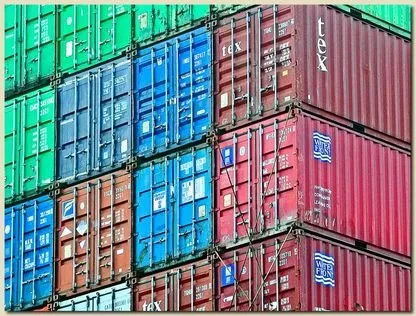
Photo: Allen Lubitz, Public domain, via Wikimedia Commons
Customs bonds are the least examined and most consequential document in an import file. They are posted once, renewed annually, and largely forgotten—until CBP issues a notice of insufficiency, a shipment is held at the port, or a liquidated damages claim arrives for an amount the bond cannot cover.
Bond sufficiency is not a formality. It is a calculation that has to keep pace with duty rates, entry volumes, and the specific enforcement programs the importer touches.
Why a Bond Sized in 2023 May Not Cover a 2026 Entry
A continuous bond is underwritten against an estimate of duty exposure, typically expressed as a percentage of the prior year's total duties, taxes, and fees, subject to a statutory floor of $50,000. When that estimate was made, the tariff landscape looked different.
Since 2018, layered tariff programs have raised effective rates on a wide range of goods, and antidumping and countervailing duty case rates can move by orders of magnitude within a single administrative review. Where CBP determines that a continuous bond does not adequately secure the potential liability on AD/CVD entries, it can require additional security, including single transaction bonds sized to the case rate. An importer whose exposure sits in a covered sector and whose bond reflects a pre-2018 duty profile is a candidate for a sufficiency finding.
Continuous or Single-Entry: Choosing the Instrument
A continuous bond covers all entries in a twelve-month period and is the default for importers with recurring volume. It is efficient and it is only as good as its amount.
A single-entry bond covers one shipment. It is used for importers with no continuous bond, for infrequent entries, and—critically—for specific entries where CBP requires additional security beyond what the continuous bond provides.
The two instruments interact. An importer may hold a continuous bond and still be required to post a single transaction bond on an AD/CVD entry. Reviewing only the continuous bond and concluding that coverage is adequate is a common and costly oversight.
The Twelve Checks
1. Reconcile last year's duty totals against the bond amount. The bond should be sized against actual duties, taxes, and fees, not against a rough figure carried forward from an earlier year.
2. Map bond coverage against open AD/CVD orders. Any entry subject to an order is a candidate for additional security, particularly where the case rate is high relative to the bond.
3. Review Section 301 and other layered tariff exposure by HS chapter. A shift in product mix can raise effective duty rates without any change in volume.
4. Confirm the bond reflects current entry volumes. Growth in shipment count or value that has not been reflected in the bond is the most straightforward insufficiency scenario.
5. Check for importer name and address accuracy. Mergers, rebranding, and address changes create mismatches that can delay entry processing independent of bond amount.
6. Verify that every importer of record in your organization holds its own bond. A parent's bond does not cover a subsidiary's entries, and a subsidiary's entries filed under a parent's number raise separate concerns.
7. Confirm the surety is aware of your current business. A surety that has not been updated on volume, product mix, or AD/CVD exposure cannot accurately price or underwrite the risk.
8. Review any notice of insufficiency, claim, or detainer from the past twelve months. Past events are the best predictor of the next sufficiency review.
9. Recalculate exposure on the largest open entries. Concentration matters: a single high-value entry can exceed the practical coverage of a continuous bond.
10. Check bond coverage for quota, visa, and other admissibility obligations. Bond liability is not limited to duties.
11. Confirm the power of attorney and bond are consistent. An agent authorized to file under one number cannot obligate another.
12. Schedule the review annually and after any material change. Acquisitions, new product lines, new suppliers, and new sourcing countries each justify a fresh look.
If a Check Fails: Correcting the Bond
Correction is straightforward when it is proactive. Contact the surety, provide updated duty and volume figures, and increase the bond amount. Where additional security is required on AD/CVD entries, arrange single transaction bonds before the next shipment rather than at the port.
Where CBP has already issued a notice of insufficiency, the timeline compresses sharply and unsecured shipments may be refused. Importers facing that letter should involve the surety and a customs professional immediately, because the remedy is available but the window is short.
The Discipline of Looking First
Bond sufficiency is one of the few customs exposures entirely within the importer's control. No classification dispute, no origin question, no valuation argument is involved—only a comparison between the security posted and the liability the importer actually carries. Twelve checks, performed once a year and again after any significant change, close a gap that is otherwise discovered at the worst possible moment.