The Badge Is Not a Rental: Why Borrowed Importer-of-Record Deals Fail Under Review

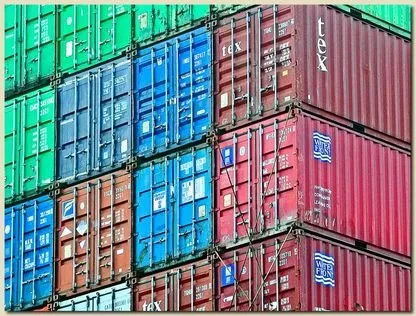
Photo: Achim Lammerts (Syntaxys), CC BY-SA 4.0, via Wikimedia Commons
There is an arrangement that resurfaces in nearly every customs review of a company new to the U.S. market. A foreign manufacturer wants to sell here but has no U.S. entity. A domestic distributor, a logistics provider, or a friendly third party offers the use of its importer number. The goods clear, the sale closes, and everyone proceeds as though the compliance question were resolved.
It is not resolved. It has merely been postponed until the first audit, penalty notice, or detained shipment.
The Arrangement, Stated Plainly
The importer of record is the party named on the entry who is liable for duties, taxes, and fees, and who owes CBP the duty of reasonable care in the entry. In practice, an entity lending its importer number is asserting to the government that it is the owner, purchaser, or consignee with a genuine financial interest in the merchandise and that it can support the entry with records.
When none of that is true, the entry contains a misrepresentation on its face. The party that lent the number did so without control over the goods, the supplier, or the valuation. The party that arranged the shipment has the commercial interest but is invisible to the agency.
Where Liability Actually Lands
Liability follows the name on the entry, not the name on the purchase order. If CBP later determines that the goods were misclassified, undervalued, or subject to an antidumping order, the assessment, the liquidated damages claim, and any penalty under 19 USC 1592 are directed to the importer of record.
That is the first hard truth of these arrangements: the entity that lent the badge bears the primary exposure. It may have earned a modest fee or nothing at all, but it has assumed liability for duties it never budgeted and for conduct it never supervised.
The second hard truth is that the beneficial owner is not thereby protected. CBP and the Department of Justice have both pursued parties whose role in the transaction was concealed. A distributor that knowingly supplied false information for an entry can face penalties in its own right. The arrangement does not relocate risk; it duplicates it in a place where neither party is prepared to manage it.
Reasonable Care Does Not Transfer With a Fax
Reasonable care is a duty owed by the importer of record, and it cannot be delegated to a broker or lent to a trading partner. It requires the importer to understand the classification, the valuation, the origin, and the admissibility of the merchandise, and to have a process for getting each of those right.
A company that lends its number typically has none of that. It cannot explain why an HS code was chosen, cannot substantiate the declared value, and cannot speak to the country of origin beyond what a supplier asserted in an email. When CBP asks the question that determines the outcome, the answer is not merely incomplete—it is unavailable.
The Recordkeeping Problem Is the One That Bites
Entry records must be retained and produced on request for five years under 19 CFR Part 163. An importer of record that never held the commercial documents cannot produce them. That failure is independently actionable, and it tends to surface early in an investigation, before the substantive questions are even reached.
The practical result is a company that is technically liable, factually uninformed, and unable to reconstruct the file—the worst combination available in a penalty proceeding.
Why Companies Still Do It
The motives are usually benign. Establishing a U.S. entity takes weeks and legal expense. Small volumes do not justify a dedicated compliance function. A distributor offers the arrangement as a service and the buyer reasonably assumes the distributor knows what it is doing. The arrangement is convenient, and convenience is a legitimate commercial value.
But convenience is the only thing it delivers. It does not create a U.S. presence, does not build a record, and does not survive contact with an audit.
What Safer Structures Look Like
Several alternatives place the compliance obligation where it can actually be discharged.
A U.S. subsidiary as importer of record. The manufacturer forms a U.S. entity, obtains an employer identification number, appoints a resident agent, posts a bond, and imports in its own name. This is the cleanest structure and the one that supports long-term growth.
A distributor that genuinely buys and resells. If the distributor takes title, bears the risk of loss, and sets its own resale price, it is a real importer of record with a real financial interest. The distinction is substance, not paperwork, and it must be documented in the agreement.
A foreign entity as importer of record. CBP permits nonresident importers in appropriate circumstances, but the entity must be able to demonstrate reasonable care, designate a U.S. agent for service, and maintain records in a form it can produce. This is viable for a serious exporter; it is not viable for an entity that exists only on a certificate of incorporation.
A foreign trade zone or bonded facility. Where the goal is to defer duty while distribution is arranged, an FTZ can move the obligation to a point where the importer has genuine control. It is a structural answer, not a workaround.
A customs broker as agent, never as importer. A licensed broker can file on behalf of an importer under a power of attorney. It cannot absorb the importer's liability, and any broker willing to serve as importer of record should itself be a warning sign.
A Practical Sequence for the Next Quarter
Identify every entry filed under a number your company did not earn. For each, document who controlled the goods, who paid the supplier, who set the resale price, and who holds the entry file. Where the answer is not your company and not a genuine purchaser, treat the arrangement as a live exposure and quantify it. Then build the structure that should have existed from the first shipment.
The cost of a subsidiary is finite and predictable. The cost of an entry filed under someone else's name is neither.