Fifty Rulebooks, One Constitution: The Compliance Trap Waiting for Multi-State Traders
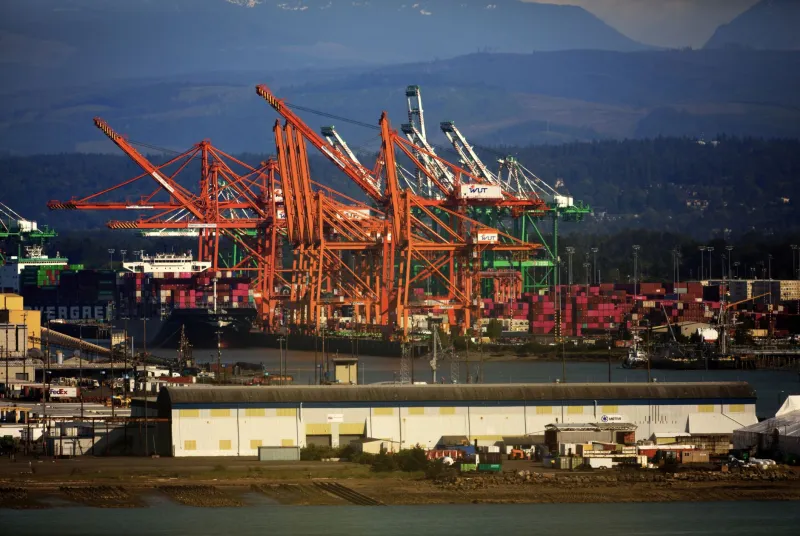
A shipment clears U.S. Customs and Border Protection without a hitch. The Harmonized System code is correct, the entry summary is filed, the duties are paid. By every federal measure, the transaction is clean. Then a state attorney general opens an inquiry — not because anything violated federal law, but because a procurement statute in that state bars dealings with entities the federal government has never sanctioned.
Scenarios like this are no longer hypothetical. Across the country, state governments are asserting themselves in domains once considered the exclusive province of Washington, and businesses operating across state lines are discovering that federal compliance is only half the equation.
The Constitutional Backdrop
The Commerce Clause of the U.S. Constitution grants Congress the power to regulate interstate and foreign commerce, and the Supreme Court has repeatedly struck down state laws that unduly burden the flow of goods or intrude on federal foreign affairs prerogatives. Yet the doctrine is far from airtight. States retain broad authority over their own procurement, their own pension investments, and the licensing of businesses within their borders — and each of those levers can reach into trade relationships that federal law permits.
The result is a patchwork: one national rulebook for tariffs and customs, but fifty playbooks for the contracts, investments, and vendor relationships that surround the movement of goods.
Where the Friction Is Concentrated
Several pressure points have emerged in recent years:
State sanctions and divestment laws. More than thirty states maintain lists of restricted or scrutinized entities — often tied to foreign governments — that go beyond federal sanctions administered by OFAC. A supplier perfectly legal under federal law may appear on a state restricted-party list, triggering contract bans or investment prohibitions for companies doing business in that state.
Procurement preferences and bans. State and municipal purchasing rules increasingly favor domestic-made goods, restrict vendors with foreign ties, or require disclosure of ownership structures far more granular than anything federal contracting demands. A manufacturer bidding on state infrastructure work may face obligations that its federal contracting experience never anticipated.
State foreign offices and port authorities. Governors now lead trade missions, states operate overseas economic development offices, and port districts negotiate directly with foreign carriers. These channels create commercial entanglements that sit in an ambiguous zone between private commerce and official foreign policy.
Data and disclosure regimes. State laws governing the movement of certain technologies, agricultural products, and personal data can impose recordkeeping and reporting burdens that layer on top of federal export control obligations — sometimes inconsistently.
The Gray Zone Problem
The danger for businesses is not malice but ignorance. Compliance teams are typically built around federal frameworks: OFAC lists, EAR and ITAR controls, CBP regulations. State-level mandates rarely appear on those checklists, and enforcement often arrives through unexpected channels — a state auditor, a procurement challenge from a competitor, or a civil action brought under a state consumer protection statute.
The legal doctrine of preemption offers some shield, but it is a defense to be litigated, not a guarantee to be relied upon. Defending a preemption claim in state court is expensive, slow, and reputationally corrosive, even when the ultimate legal position is strong.
A Compliance Checklist for Multi-State Operators
Organizations moving goods, signing vendor contracts, or bidding on public projects across state lines should take the following steps:
- Map state restricted-party lists. Screen counterparties not only against federal lists but against the state-level restricted and scrutinized entity lists in every state where you operate, sell, or hold contracts.
- Audit procurement eligibility before bidding. Review state and municipal procurement codes for domestic-preference rules, ownership disclosure requirements, and foreign-adversary provisions before committing resources to a bid.
- Build preemption analysis into legal review. When a state rule conflicts with federal policy, document the analysis early. A preemption position prepared in advance is far stronger than one assembled under enforcement pressure.
- Track state trade legislation. Assign ownership for monitoring state legislative developments affecting commerce, sanctions, and procurement — the volume of new state-level measures has grown sharply and shows no sign of slowing.
- Coordinate with state-level counsel. Federal regulatory counsel and state government relations advisors too often work in separate silos. Multi-state operators need both perspectives in the same compliance conversation.
- Preserve records uniformly. State enforcement timelines and discovery standards vary. A records retention policy built solely around federal requirements may leave gaps a state investigator can exploit.
The Road Ahead
The tension between federal commerce authority and state-level economic policy is structural, not transient. As geopolitical competition reshapes supply chains, states will continue to use every tool at their disposal — procurement, divestment, licensing, and disclosure — to advance their own economic and security preferences.
For businesses, the lesson is straightforward: treat state-level trade compliance as a distinct discipline, not an afterthought. The federal clearance stamp on a shipment is necessary. Increasingly, it is not sufficient.