Rethinking the Front Door: How Port of Entry Choices Are Quietly Determining Import Winners and Losers
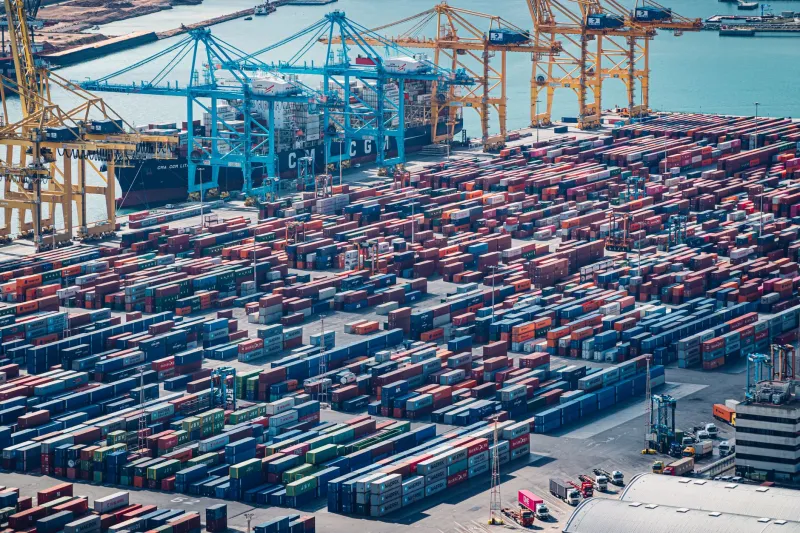
Every shipment that crosses into the United States must pass through a designated port of entry—a facility where U.S. Customs and Border Protection (CBP) exercises its authority to examine, assess, and release commercial goods. Most importers treat this decision as an afterthought, defaulting to whichever major hub their freight forwarder or ocean carrier has historically used. The Port of Los Angeles, the Port of New York/New Jersey, and Chicago O'Hare account for a disproportionate share of commercial import volume, and their dominance has become self-reinforcing. Shippers route to them because carriers serve them; carriers serve them because shippers route to them.
What this cycle obscures is a quiet competitive advantage that a smaller but growing segment of American importers has begun to exploit: the deliberate, data-informed selection of entry points that align with their specific cargo profiles, downstream distribution needs, and timeline requirements. The results, in documented cases, have included clearance time reductions of two to four weeks on high-volume import programs—a margin that, in industries where inventory carrying costs run to fractions of a percentage point per day, translates directly into measurable profit.
Why Congestion at Major Hubs Is a Structural Problem, Not a Temporary One
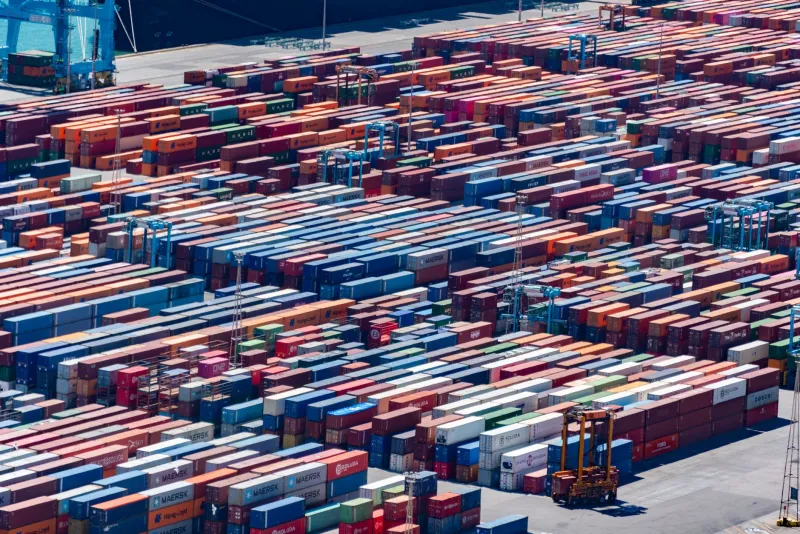
The congestion challenges that plagued the Port of Los Angeles and Long Beach during the pandemic-era supply chain disruptions were extreme in degree but not exceptional in kind. Even under normal operating conditions, the nation's highest-volume ports process cargo under sustained pressure. CBP staffing ratios, examination queues, and drayage availability at these facilities reflect a system operating near its designed capacity on most business days.
This structural reality has measurable consequences for clearance timelines. CBP's Automated Targeting System (ATS) flags a percentage of all entries for examination—either documentary review or physical inspection. At high-volume ports, the queue for those examinations can stretch from days into weeks. A shipment selected for a Customs Exam Station (CES) hold at a major hub may wait significantly longer for a physical devanning than the same shipment would at a regional facility where examination capacity is less strained.
The implication is straightforward: for cargo that carries any meaningful examination risk—whether due to country of origin, commodity type, or prior compliance history—routing through a less-congested port of entry can reduce worst-case clearance timelines substantially.
The Case for Regional and Inland Ports of Entry
The United States operates more than 300 official ports of entry, administered by CBP across air, sea, and land modes. The vast majority of these facilities process a fraction of the volume handled by the major coastal hubs, and that lower volume is precisely what makes them operationally attractive for certain import profiles.
Consider the experience of a Midwest-based industrial equipment importer that historically routed ocean freight through the Port of Houston before transloading to rail for final delivery to distribution centers in Ohio and Indiana. After a routing audit conducted in partnership with a licensed customs broker, the company began diverting a portion of its shipments through the Port of Baltimore, which offers direct intermodal rail connections to the Midwest and consistently demonstrates faster average release times for industrial machinery entries. The company reported a reduction of approximately 11 days in average door-to-distribution-center transit time on the affected lanes—a result attributable in roughly equal measure to reduced port dwell and improved inland connectivity.
A separate case involved a Texas-based consumer goods importer that had been routing air freight through Los Angeles International Airport. Examination queues at LAX for its product category—a mid-risk classification under ATS criteria—were generating average holds of five to eight business days. After consulting with its CBP-assigned trade liaison, the company began splitting its air shipments between LAX and Dallas/Fort Worth International Airport, where examination turnaround for comparable entries averaged two to three business days. The annual carrying cost savings on the rerouted volume were estimated in the low six figures.
What CBP Officials Say About Regional Capacity
CBP's public communications consistently emphasize the agency's commitment to trade facilitation alongside its enforcement mission, and agency officials at regional field offices have been candid in acknowledging that capacity differences across ports are real and consequential for importers.
Officials at several CBP field offices have noted that ports with lower baseline volume are often better positioned to process entries within standard release windows, and that importers willing to engage proactively with their local CBP Center of Excellence and Expertise (CEE)—the agency's national processing hubs organized by industry—can sometimes accelerate the pre-arrival review process regardless of which physical port they use. The CEE structure, introduced under the Trade Facilitation and Trade Enforcement Act of 2015, means that the port of physical arrival and the port of processing are no longer always synonymous, creating additional flexibility for importers who understand the system.
CBP's voluntary trade partnership programs, particularly the Customs-Trade Partnership Against Terrorism (C-TPAT), also interact with port selection in ways that many importers underappreciate. C-TPAT-certified importers receive expedited processing benefits that are more consistently realized at lower-volume ports, where examination resources are less stretched and the expedited lane advantage is less diluted by overall queue depth.
A Framework for Auditing Your Current Routing Decisions
For importers who have never formally evaluated their port of entry strategy, the following framework provides a starting point for a structured audit.
Step one: Map your cargo profile against examination risk factors. Work with your customs broker to identify which of your commodity classifications, countries of origin, and supplier profiles carry elevated ATS examination probabilities. High-risk profiles benefit most from routing through ports with shorter examination queues.
Step two: Identify your downstream distribution geography. Port selection is not only a customs efficiency question—it is a total landed cost question. A port that offers faster clearance but adds three days of inland transit may not represent a net improvement. Overlay your distribution center locations against the intermodal and trucking connectivity of candidate ports.
Step three: Evaluate carrier and forwarder coverage at alternative ports. The operational flexibility to use regional ports depends on whether your logistics partners can support those lanes. Many major freight forwarders have established relationships at a broader range of ports than they routinely discuss with clients. Request a coverage review as part of your audit.
Step four: Engage CBP proactively. CBP's trade outreach programs, including the Centers of Excellence and Expertise and the Commercial Targeting and Analysis Center, provide channels through which importers can better understand how their entries are being processed and where friction points exist. Importers who treat CBP as a compliance adversary rather than an operational partner consistently leave facilitation benefits on the table.
Step five: Pilot before committing. Route a defined subset of shipments through a candidate alternative port for a 90-day period, tracking clearance times, examination rates, total transit times, and landed cost components against your historical baseline. Data from a controlled pilot is far more reliable than industry averages when making routing commitments.
The Strategic Imperative
Port of entry selection has long been treated as a logistics detail rather than a strategic decision. That framing is increasingly difficult to justify. In an environment where supply chain speed is a competitive differentiator and carrying costs respond directly to the number of days goods spend in transit or in examination holds, the front door through which imports enter the country deserves the same analytical rigor applied to supplier selection, contract terms, and tariff classification.
The importers gaining ground in this area are not those with the largest freight volumes or the most sophisticated technology platforms. They are, more often, mid-sized operators who have invested in understanding how the regulatory and logistical system actually functions—and who have been willing to question the defaults that their industries have accepted for decades. For businesses prepared to undertake that examination, the potential returns are both concrete and, in most cases, largely uncaptured.