Beyond the Coastal Crunch: How Inland Ports Are Rewriting the Rules of American Import Logistics
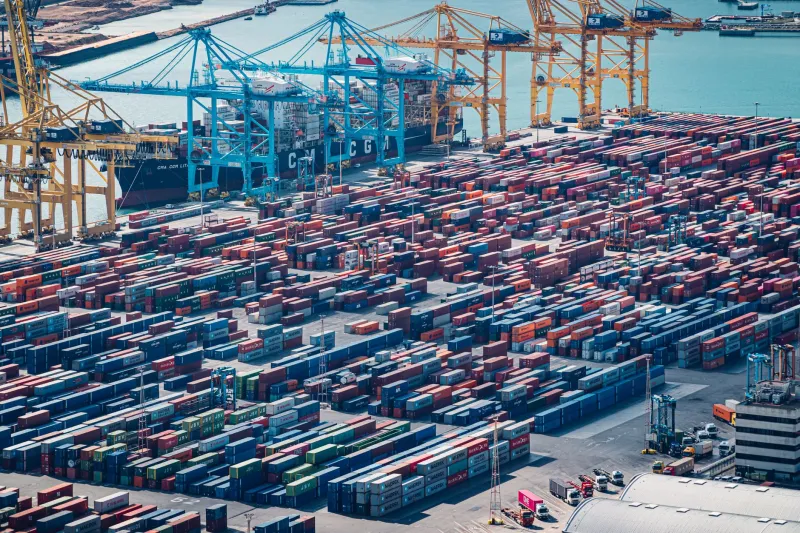
For decades, the dominant logic of American import strategy has been geographically simple: ship into the largest coastal gateway closest to your destination, absorb the delays, pay the fees, and move on. Los Angeles and Long Beach alone handle roughly 40 percent of all containerized imports entering the United States. New York-New Jersey, Savannah, and Houston account for much of the remainder. These ports are enormous, well-connected, and deeply embedded in the institutional memory of American freight logistics.
They are also, increasingly, points of systemic failure.
The supply chain disruptions of 2021 and 2022 exposed the fragility of coastal concentration in ways that spreadsheets had not previously captured. Container ships anchored for weeks off San Pedro Bay. Chassis shortages cascaded into drayage delays. Customs and Border Protection (CBP) processing queues stretched beyond historical norms. The cost was not merely inconvenience — it was measurable: higher demurrage charges, missed delivery windows, strained retailer relationships, and in some cases, lost contracts.
What emerged quietly from that chaos was a strategic reorientation among a subset of importers who began asking a different question: not how do we manage coastal congestion, but how do we avoid it entirely?
The Inland Port Advantage: More Than a Workaround
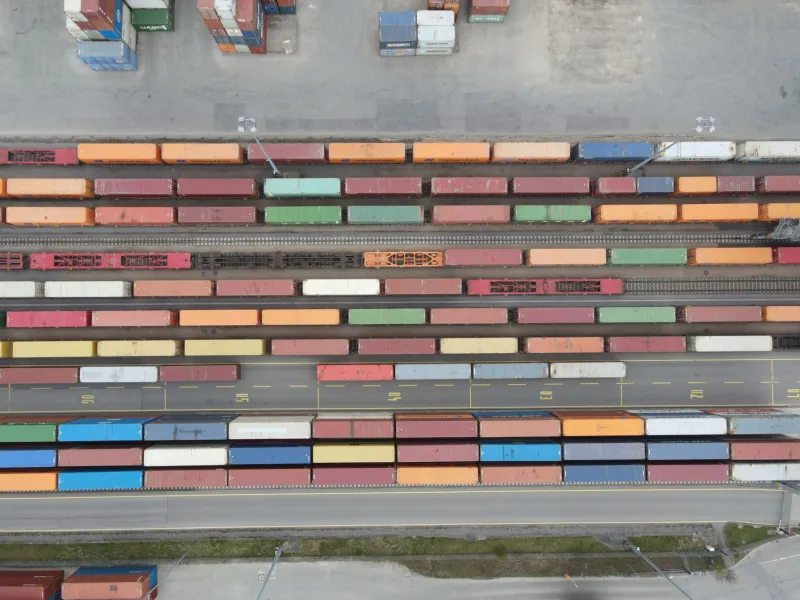
Inland ports — sometimes called inland container depots, dry ports, or intermodal logistics centers — are not new infrastructure. Facilities in Kansas City, Memphis, Chicago, Dallas-Fort Worth, and Columbus have processed freight for years. What has changed is the sophistication with which importers are now integrating these hubs into their primary routing strategies, rather than treating them as contingency options.
The structural appeal is straightforward. Inland ports typically operate with lower terminal handling fees than their coastal counterparts, in part because they face less demand pressure and in part because their cost bases — land, labor, real estate — are fundamentally different. More importantly, several major inland facilities have invested heavily in CBP coordination, establishing designated examination stations and in some cases full Foreign Trade Zone (FTZ) status that creates meaningful regulatory advantages for importers managing bonded goods or seeking to defer duty payments.
Kansas City, for instance, has positioned itself as one of the most CBP-integrated inland hubs in the country. The facility maintains a resident CBP presence, supports electronic pre-arrival filing through the Automated Broker Interface (ABI), and benefits from strong rail connectivity to both West Coast and Gulf ports. For importers whose goods originate in Asia and terminate in the central United States, routing through a Kansas City intermodal ramp — rather than clearing at Long Beach and trucking inland — can reduce total transit time by two to four days while meaningfully lowering port-related fees.
Memphis presents a different but equally compelling case. Its geographic position at the intersection of major north-south and east-west freight corridors, combined with proximity to significant distribution infrastructure, makes it particularly attractive for consumer goods importers managing high-SKU inventories. The Memphis area also benefits from an established FTZ network that allows importers to manipulate, repackage, or further manufacture goods before formal entry — a flexibility that coastal FTZs offer in theory but often struggle to deliver efficiently given congestion-related processing delays.
Federal Agency Coordination: The Hidden Variable
One factor that importers frequently underestimate when evaluating inland routing is the quality of inter-agency coordination at a given facility. CBP is the primary federal actor in import clearance, but it rarely operates alone. The Food and Drug Administration, the U.S. Department of Agriculture, the Consumer Product Safety Commission, and the Environmental Protection Agency all exercise examination authority over specific commodity categories. At congested coastal ports, the practical challenge of coordinating multiple agency holds on a single shipment can extend dwell times substantially.
At several inland hubs, the lower overall volume creates a structurally different operating environment. Examination queues are shorter, inter-agency communication is more direct, and the relationship between licensed customs brokers and resident federal personnel tends to be more consistent. This is not a formalized regulatory advantage — it does not appear in any CBP guidance document — but it is a real operational one that experienced import managers have learned to factor into their routing decisions.
Businesses operating in regulated commodity categories — food, agricultural products, medical devices, consumer electronics subject to safety review — should specifically investigate the agency presence and coordination history at any inland hub under consideration. A facility that processes high volumes of the relevant commodity type will typically have more experienced federal personnel on-site and more established examination protocols, both of which translate into more predictable clearance timelines.
Evaluating the Route Change: A Framework for Importers
The decision to shift primary routing through an inland hub is not one-size-fits-all. Several variables determine whether the strategy delivers genuine savings or simply relocates complexity.
Origin port alignment is the first consideration. Inland routing typically works best when goods are moving via rail from a West Coast or Gulf arrival port rather than being trucked from the coast. Rail intermodal from Los Angeles to Chicago or Kansas City is well-established and cost-competitive; the same cannot always be said for less-served corridors. Importers should map their specific origin-to-destination flow against available rail service before making routing assumptions.
Commodity classification and examination probability matter significantly. High-examination-rate commodities — certain food categories, products from countries subject to enhanced scrutiny, goods flagged under antidumping or countervailing duty orders — benefit most from inland facilities with strong federal coordination. Importers can request CBP's Automated Targeting System risk profiles through their brokers to better understand their examination exposure.
FTZ eligibility should be evaluated for any importer managing goods that may be subject to duty manipulation, re-export, or further processing. The FTZ Board maintains a public list of approved zones, and several inland hubs operate under general-purpose zone grants that are accessible without the need for site-specific activation.
Total landed cost modeling must account for all variables: origin terminal fees, ocean freight differentials (some carriers price inland-routed bills of lading differently), intermodal rail costs, inland terminal handling, drayage to final destination, and the time value of any clearance delay reduction. Importers who model only the visible port fees often underestimate the full financial impact of transit time improvements.
The Coordination Imperative
What the inland port conversation ultimately surfaces is a broader truth about American import strategy: the businesses achieving the most efficient, cost-effective supply chains are not simply those with the best freight contracts. They are the ones that understand the federal regulatory architecture governing their goods — and actively design their logistics around it.
Inland hubs are not a universal solution. They are a tool, and like any tool, their value depends on how deliberately they are applied. For importers willing to invest in the analysis, the opportunity to reduce costs, improve clearance predictability, and build supply chains less vulnerable to coastal disruption is genuine and, in many cases, underexplored.
The ports that will define American import logistics over the next decade may not be the ones that appear largest on a map. They may be the ones that have quietly built the most coherent relationship between physical infrastructure, federal agency coordination, and the operational needs of modern importers.
For business professionals navigating this landscape, the message is clear: the geography of smart importing is changing, and the time to evaluate that change is before the next coastal disruption — not during it.