Five Agencies, One Container: Mapping the Federal Checkpoints That Decide Whether Your Import Moves or Stalls
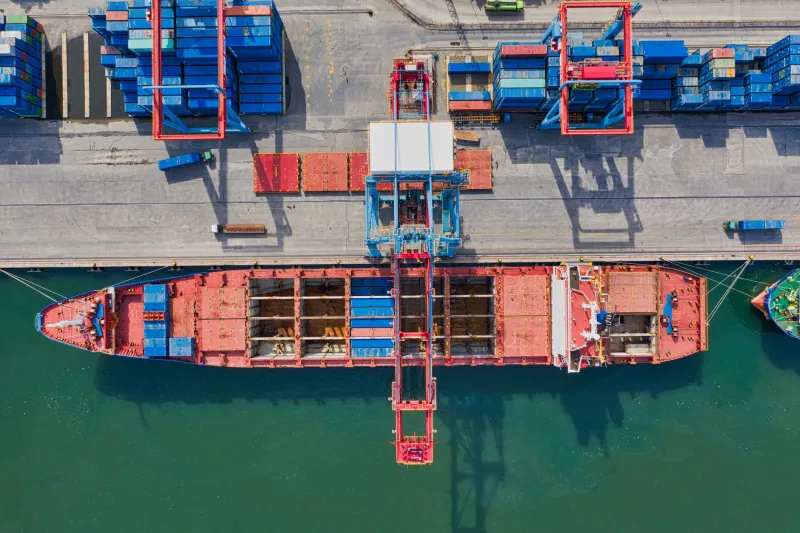
For many American importers, the assumption is simple: clear U.S. Customs and Border Protection, and your goods are home free. In practice, CBP is often just the first handshake. Behind the scenes, a web of federal partner agencies holds independent authority to examine, detain, or exclude imported merchandise — and a single shipment can trigger several of them at once.
Understanding this interagency architecture is no longer optional. For companies moving regulated goods, it is the difference between a container that rolls off the terminal in 48 hours and one that accumulates demurrage charges while three agencies debate jurisdiction.
Why One Shipment Rarely Means One Regulator
The legal foundation dates to the Customs Modernization Act and subsequent memoranda of understanding that designated CBP as the enforcement arm for other agencies at the border. CBP does not decide whether your dietary supplement meets FDA labeling rules — it merely enforces the FDA's determination. The practical consequence: an importer may face multiple independent holds on the same bill of lading, each with its own documentation requirements, timelines, and appeal processes.
Consider a routine consignment of electric bicycles with lithium batteries, packaged with a reusable water bottle and marketed with health claims. Depending on the details, that shipment could draw attention from the Consumer Product Safety Commission (battery and product safety), the EPA (battery chemistry and emissions-related claims), the FDA (health claims on packaging), and the Federal Communications Commission (if any wireless components are aboard). Four agencies, one container, one importer on the hook for storage fees throughout.
Know Your Alphabet Soup
The partner-agency landscape is broad, but a handful of regulators account for the majority of commercial holds:
FDA governs food, beverages, dietary supplements, drugs, cosmetics, and medical devices. Expect scrutiny of labeling, facility registration, and prior notice filings. Shipments lacking prior notice can be refused before arrival.
USDA/APHIS polices agricultural products, wood packaging, and anything that could introduce plant or animal pests. Non-compliant wood pallets and crates remain one of the most common — and most avoidable — causes of re-export orders.
CPSC oversees consumer product safety, from children's toys to flammable textiles, and increasingly requires testing certificates filed electronically at entry.
EPA regulates vehicles, engines, pesticides, and certain chemicals under TSCA. An engine imported without a certificate of conformity can be denied entry outright.
ATF controls firearms, ammunition, alcohol, and tobacco — categories where a missing permit converts an administrative delay into a potential enforcement matter.
Beyond these, the FCC, DOT/NHTSA, Fish and Wildlife Service, and DEA each hold jurisdiction over narrower product classes. The point is not memorization; it is mapping.
Where Overlap Becomes Expense
Overlapping jurisdiction is where delays multiply. A consumer electronics product with a rechargeable battery may face CPSC questions on safety certification, EPA questions on chemical reporting, and DOT questions on battery transport classification — three agencies, three document sets, three potential holds. When agencies coordinate poorly, the importer pays the price in port storage, missed retail windows, and contractual penalties downstream.
The financial exposure compounds quickly. Daily container storage and per-diem charges at major U.S. ports routinely run into the hundreds of dollars. A two-week hold on a single container can erase the margin on an entire purchase order. For seasonal goods, a delayed entry may render the merchandise unsellable altogether.
Building Multi-Agency Compliance Before Departure
The importers who move fastest through this maze do the regulatory work months before the vessel sails. Several practices stand out:
Conduct a product-jurisdiction mapping exercise. Before first import, identify every agency with potential authority over the product, its packaging, and its marketing claims. This is a one-time investment per product line that pays for itself on the first avoided hold.
File the electronic paperwork early and completely. Prior notice for FDA goods, eCertification for CPSC-regulated products, and ISF filings done correctly the first time remove the most common administrative triggers for examination.
Vet foreign suppliers against U.S. requirements. A manufacturer certified to ISO standards may still be unfamiliar with FDA labeling or APHIS wood-packaging rules. Importer responsibility does not transfer with the purchase order.
Use licensed customs brokers as coordinators, not just filers. A skilled broker can identify when a shipment requires partner-agency engagement and initiate it proactively, rather than waiting for a hold notice after arrival.
Document everything. When a hold occurs, the importer who can produce test reports, certificates, and correspondence within hours — not weeks — is the importer who gets released first.
The Bottom Line for U.S. Importers
Federal oversight of imports is not shrinking. Enforcement coordination between CBP and its partner agencies has only deepened, and data-driven targeting means regulators increasingly know what is in a container before it arrives. The companies that thrive are those that treat interagency clearance as a supply-chain function — planned, budgeted, and managed from the point of manufacture rather than the point of entry.
One container. Potentially five agencies. The importers who map the maze in advance are the ones whose goods keep moving.